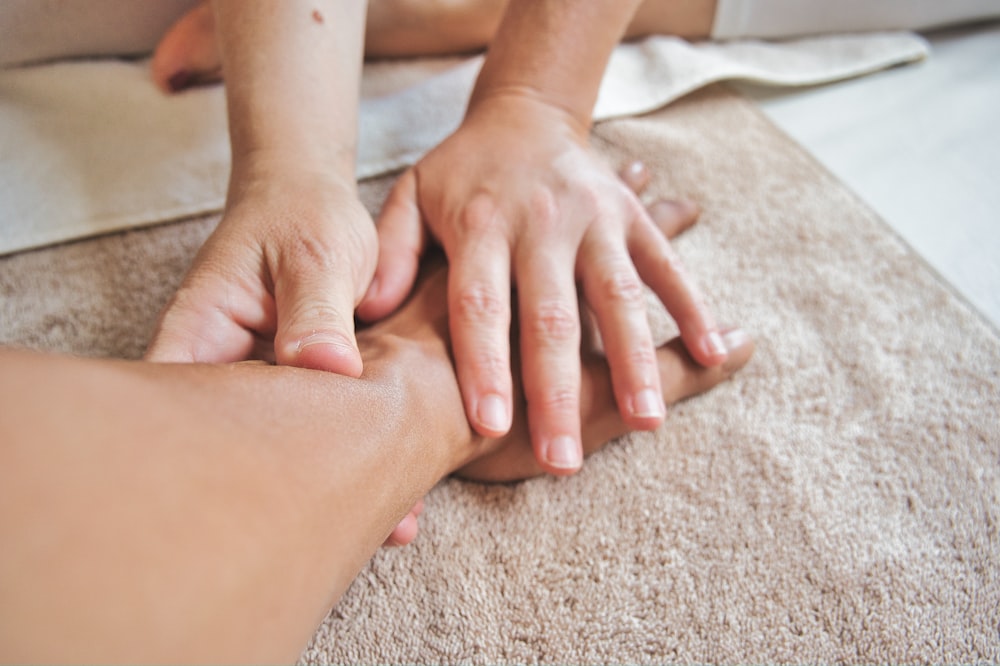
You don't need strong hands for a good massage. You need slow hands, relaxed hands, and a little attention. Here's how to find the right pressure every time.
The pressure dial
Ask twice at the start — "more?" "less?" — and then switch to reading instead of asking: their breathing, their face, the way the muscles soften under your palms. A deepening breath means yes. Flinching or holding still means ease off.
Where pressure comes from
Weight, not muscle: lean in with your body and keep hands and fingers soft.
Deep work is slow work — the deeper you go, the slower you move.
After every deep move, a long soothing stroke. It's the golden rule of the whole alphabet.
Strokes travel toward the heart; finish each area that way.
If they're ticklish
Tickle lives in light, fast, unexpected touch. Go slower, broader and a touch firmer — full palms, steady rhythm — and it disappears.
Rubly's lessons and guides are educational, not medical advice.